
You’re not alone if you’re struggling to accept the changes to your daily life caused by permanent tooth loss. Your teeth are essential for eating, speaking, and smiling confidently, and when one or more go missing, these once-simple tasks can become much more challenging.
Your dentist can help rebuild your smile with dental implants, which come highly recommended by many dental experts. But you might hesitate to proceed with this treatment if you’re concerned your new teeth might get cavities. Continue reading to learn more about what to expect and how to avoid potential problems!
What Are Dental Implants Made From?
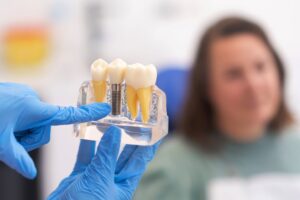
These replacements are unique because, unlike bridges and dentures, they are surgically embedded directly into your jaw. The posts that are inserted are made from durable, biocompatible materials that your body is unlikely to reject, such as titanium or resilient ceramic.
It can take several months to recover, as your mouth must generate enough new bone growth to fuse with this support rod. Once you’ve healed sufficiently, your dentist can help provide a customized restoration based on how many teeth were lost. For instance, a single implant can anchor a dental crown, two can support a bridge, and several can be placed to hold specially designed dentures. These are usually crafted from tooth-colored ceramic that can be made to match the size, shape, and shade of your natural enamel for seamless results that boost your confidence.
Do Dental Implants Get Cavities?
You might be on the fence about getting dental implants if you’re worried they might develop decay. However, the truth is that these prosthetics aren’t made from the same organic substances as your enamel. That means the bacteria in your mouth won’t affect them the same way, and they can’t get cavities.
But they’re not invincible. If you don’t take the proper precautions to protect your dental health, you might develop gum disease or tooth decay, which can eventually weaken the bone and connective tissues holding your new teeth in place, causing them to fail.
How Can I Help Maintain My Dental Implants?
This procedure has an incredibly high success rate of over 90%, so most patients won’t develop complications as long as they follow the provided aftercare instructions once their implants are placed.
You can help preserve your new teeth by:
- Implementing a routine. Brushing and flossing twice daily remove plaque and germs that cause oral issues that can harm your restoration.
- Choosing foods carefully. Avoiding overly hard, crunchy, sugary, sticky, or darkly colored foods can help prevent common concerns, such as chips, cracks, destabilization, or discoloration.
- Scheduling routine exams. Seeing your dentist every 6 months for a standard checkup and cleaning allows them to monitor your dental condition to catch and treat any areas of concern, like a damaged dental implant, before it progresses.
If you’re still unsure whether you’re a good candidate for this service, you can find out by scheduling an appointment with your provider!
Meet the Author
Dr. Veechika Gaddam is passionate about helping families in Freemont build and maintain the happiest, healthiest versions of their smiles. She completed dental school at Mamata Dental College in Khammam, India, then earned a Doctor of Dental Surgery from the University of California San Francisco School of Dentistry. Today, she has completed additional training and has the state-of-the-art equipment to place and restore dental implants in the office for your convenience. If you need to replace missing teeth, you can request an appointment on the website or call (510) 252-0555.